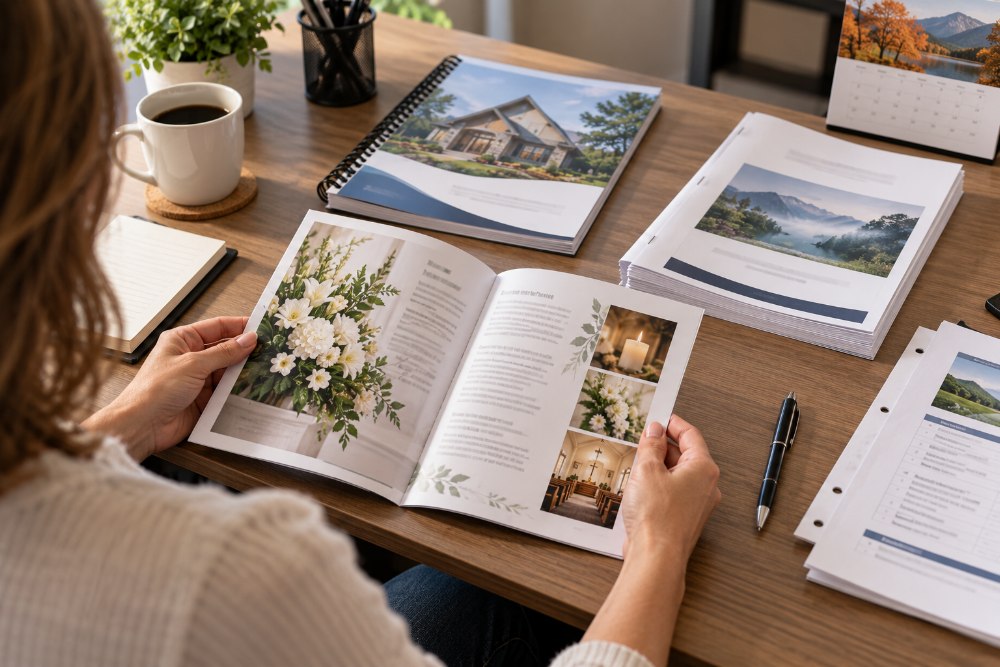
Sometimes the job is not finished when the pages come out of the printer.
A program needs to feel like a program. A report may need binding. A training manual needs to stay together and open easily. A presentation packet may need stapling, hole punching, folding, or another polished finish.
The goal is not just printed pages. It is a finished piece that is ready to use.
Start With the Finished Piece
Before choosing paper, page size, or binding, it helps to think about what the document needs to do when it is finished.
Will people hold it during an event? Refer back to it during training? Keep it on a desk? File it in a binder? Hand it to a client as part of a proposal?
That answer helps determine whether the project should become a saddle-stitched booklet, a coil-bound manual, a stapled packet, a folded piece, a laminated document, or something simpler.
Ways We Can Finish the Project
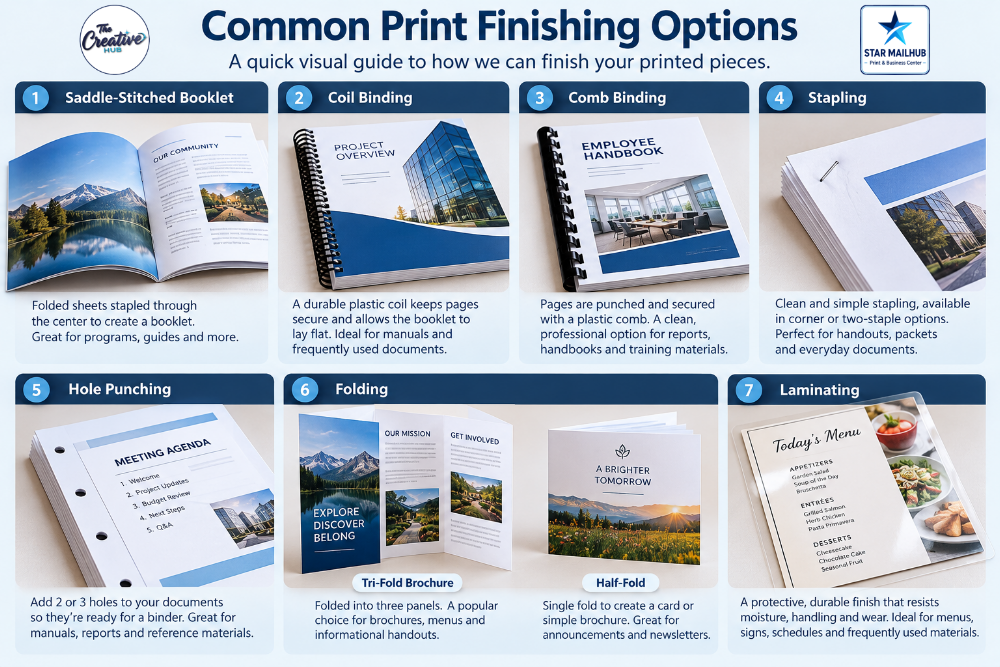
Not sure which finish you need? Here’s what the common options look like.
Programs and Booklets Should Feel Finished
Event programs, memorial programs, church materials, school booklets, community publications, and small catalogs all benefit from being produced as one finished piece instead of a loose stack of pages.
Saddle stitching keeps pages in order, gives the piece a clean spine, and creates something that is easy to hand out and easy to use.
The finished size, page count, paper choice, cover, and artwork all affect how the booklet should be produced, so it helps to plan the final format before the file is locked.
Reports, Manuals and Business Packets Need Different Finishes
Not every multi-page project belongs in a booklet.
A training manual may work better with coil binding so it opens flat. A proposal may only need a clean staple. A reference packet may need to be three-hole punched for a binder. A presentation may need heavier covers and a more substantial bound finish.
Matching the finishing method to the way the document will actually be used usually produces a better result than choosing the binding first.
More Room When the Project Needs It
Some projects need more space than standard letter-size printing provides.
We can produce print pieces up to 13×19, giving more flexibility for larger pages, folded pieces, booklet spreads, covers, presentation materials, and other projects where standard sizes feel cramped.
Larger sheets can also create more options when a project needs to be folded or trimmed down to a finished size.
And Yes — Calendars Fit Here Too
This time of year, short-run calendars are another good example of a project that involves more than simply printing pages.
Whether the project is a family photo calendar, business calendar, fundraiser, or seasonal promotional piece, the page size, order, finishing, and final presentation all matter. The same production mindset applies: start with how the finished piece needs to look and function.
Already Have the File? Send It.
If your booklet, program, report, manual, packet, or calendar is already designed, send the file and tell us how you want the finished piece to work.
We can review the size, page count, finishing method, and other production details before the job moves forward.
If the file is not production-ready yet, we can also help get the project into printable form.
The Finished Piece Is the Point
Printing is only part of the job when the project needs to be folded, bound, stapled, punched, laminated, assembled, or otherwise finished.
Bring us the document. Leave with something ready to hand out, present, file, use, or give away.
Have a Booklet, Program or Bound Document Project?
Send your file, quantity, finished size, deadline, and a short note about how you want the piece finished.